
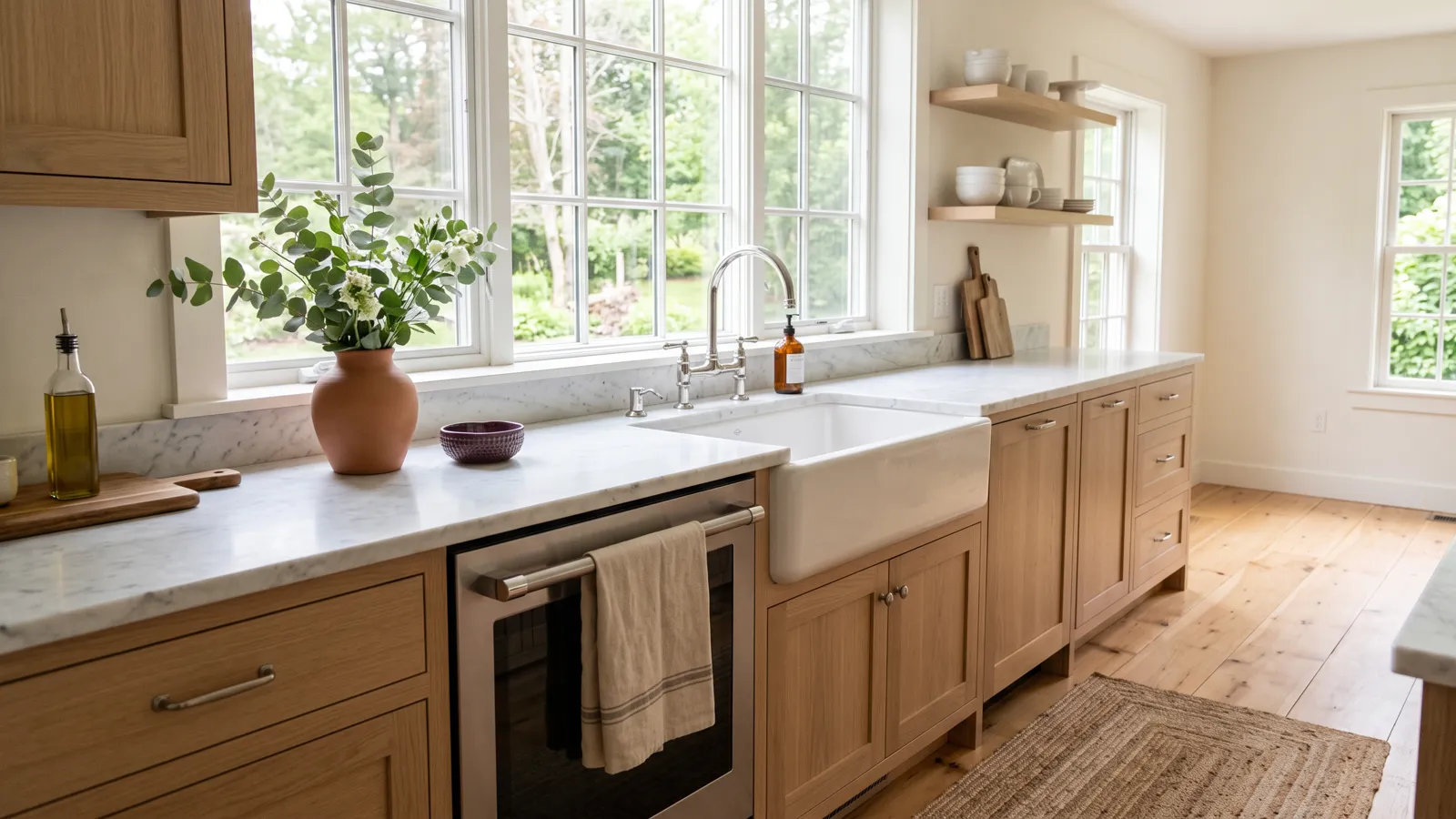
A pH-neutral cleaner is a product that sits near the middle of the pH scale, neither acidic nor alkaline. CDC advises selecting neutral detergents, pH between 6 and 8, for most cleaning. It is the everyday default because it lifts ordinary soil without working against the finish on a floor, a counter or a fixture.
What is a pH-neutral cleaner?
The pH scale runs from 0 to 14. Pure water sits at 7, acids fall below it and alkalis rise above it. A cleaner described as pH neutral is formulated to land close to that middle, so its cleaning power comes from detergency and from your own mechanical work rather than from chemical attack.
CDC puts a number on the range: "For most environmental cleaning procedures, select neutral detergents (pH between 6 and 8) that are easily soluble (in warm and cold water)."
Most of what accumulates in a house is ordinary soil, and ordinary soil comes off with a neutral detergent, warm water and a cloth.
What does pH neutral mean on a cleaning label?
It means the maker has balanced the formula so it is neither acid nor alkali, and nothing more than that. It is not a claim about safety, about germs or about how natural the ingredients are.
That narrow meaning is why the phrase is useful. CDC's cleaning guidance explains the reasoning for instrument cleaning: "a neutral or near-neutral pH detergent solution commonly is used because such solutions generally provide the best material compatibility profile and good soil removal." The same page notes that alkaline cleaning agents "efficiently dissolve protein and fat residues; however, they can be corrosive."
Material compatibility is the part that matters in a home. A neutral product gives up some of that aggression in exchange for not harming what it touches.
Why do pros use pH-neutral cleaner on floors?
Because a floor is a finish, not a material. On most wood floors you never touch the wood at all, and the coating on top is what decides which products are allowed.
The National Wood Flooring Association is direct about it: "A pH-balanced cleaner ensures that the wood finish is protected and won't be stripped away by harsh chemicals." Its list of what to keep off a finished floor is short and specific. Bleach and ammonia-based cleaners "can strip the finish off wood floors and cause permanent damage." Vinegar is popular, but "its acidic nature can damage the wood floor and finishes over time."
Sealed stone leads to the same place from different chemistry. The Natural Stone Institute advises you to "clean stone surfaces with a neutral cleaner, stone soap, or a mild liquid dishwashing detergent and warm water," and warns that "products containing lemon, vinegar or other acids may dull or etch calcareous stones." Marble, limestone and travertine are the calcium carbonate stones it describes as sensitive to acid. Granite and quartzite resist most kitchen acids, yet "acidic cleaners are still not recommended."
There is a practical reason too. CDC notes that microfiber "can be damaged by high pH," so the pads and cloths a careful cleaner relies on last longer on a neutral diet. More on method sits in our guide to wood floor deep cleaning.
Which cleaners are pH neutral, and which are not?
Most of a cleaning cabinet is not neutral. Each product was formulated for a particular soil.
| Product type | Where it sits | What it is for |
|---|---|---|
| Neutral detergent, pH 6 to 8 | Neutral | CDC's choice for most cleaning: everyday surfaces, finished floors, sealed stone |
| Mild liquid dish detergent in warm water | Near neutral, by formula | The Natural Stone Institute's routine option for stone |
| Wood floor cleaner made for your finish | pH-balanced, per the NWFA | Finished wood, on a damp pad |
| Hard-water, lime and rust removers | Acidic | Mineral deposits, rust marks, soap film |
| Vinegar and lemon juice | Acidic | Food, not a product for stone or finished wood |
| Degreasers and heavy-duty cleaners | Alkaline | Food spills, oils and grease |
| Chlorine bleach products | Not a neutral cleaner | Disinfecting after cleaning, when warranted |
| Scouring powders and creams | A separate question from pH | Abrasives, which the Institute says may scratch certain stones |
Read any label for its listed surfaces before the pH. A correctly chosen acid used on the wrong counter still ruins the counter.
When is an acid or an alkaline cleaner the right tool?
When the soil is mineral, or when it is greasy. New Mexico State University Extension sorts it cleanly: "Acids are used to remove mineral deposits, rust stains, and hard water deposits," which in a house means shower glass, fixtures and soap film.
Alkalis take the opposite half of the work. The same guide notes that "alkalis help clean food spills, oils, grease, and everyday things that get dirty. They remove oily dirt without rubbing."
So a well-kept home usually needs three products, not twelve: a neutral cleaner for the routine, something mildly acidic for the shower glass, and something alkaline for the range and the exhaust hood.
Does a pH-neutral cleaner disinfect?
No, and pH is not what decides it. Cleaning and disinfecting are two different jobs.
EPA draws the line by regulation: "Cleaning removes dirt and organic matter from surfaces using soap or detergents," while "disinfecting kills viruses and bacteria on surfaces using chemicals." The sentence worth remembering is this one: "EPA regulates cleaning products only if they sanitize or disinfect."
CDC describes cleaning as what "removes most germs, dirt, and impurities from surfaces" with water, soap and scrubbing, and advises disinfecting "when someone is sick or if someone is at a higher risk of getting sick due to a weakened immune system." Its warning runs the other way as well: "Disinfectants are only for disinfecting after cleaning and are not substitutes for cleaning, unless they are a combined detergent-disinfectant product."
Is a pH-neutral cleaner safe for kids and pets?
Neutral pH is a reasonable starting point rather than an answer. The directions on the back of the bottle are still the part that protects anyone.
The nearest independent screen on ingredients is EPA's Safer Choice label, where "every ingredient must meet strict safety criteria for both human health and the environment," and certified products must also "pass category-specific performance standards." A fragrance-free version of the label exists as well.
Note what that reviews: human health and the environment, not pet health. Our piece on what hardwood floor cleaner is safe for pets goes through the rest, and bathrooms on a septic system have their own considerations in which bathroom cleaners are septic-safe.
How do you use a neutral cleaner without leaving film?
Use less of it than feels right, and dry as you go. Residue is nearly always a dosing or drying problem rather than a product problem.
- Take the dry soil off first. The NWFA describes routine care as "sweeping, dust mopping, or vacuuming using the bare floor setting to remove dust and dirt."
- Mix at the label's dilution. The Natural Stone Institute warns that "an excessive concentration of cleaner or soap may leave a film and cause streaks."
- Put the product on the pad, not on the surface, so the amount is controlled.
- Work small sections and change the pad or the water when it stops looking clean.
- Use a damp pass, never a wet one. The NWFA says not to use wet mops or steam mops, "which will damage the finish and the wood over long periods of time."
- Dry metals and glass by hand at the end. Water is neutral and still leaves a mark when it dries on its own.
What changes in a New England home
Two local conditions decide which bottle comes out. Winter brings grit, slush and road-salt residue indoors from November through mud season, and that soil is best handled dry first, then with a neutral cleaner on a damp pad. A hallway in Salem or Chelmsford takes more of that traffic in January than the rest of the house sees all year.
The second is water. Many homes here draw from a private well, and mineral-rich water leaves deposits on shower glass, tile and fixtures. That is the one job where a mildly acidic product earns its place, used on the surfaces its label names and kept away from marble, limestone and travertine.
How Andemora matches the product to the surface
Supplies come with us, and the products we use are safe for kids and pets. Finished wood and natural stone get a neutral product on a damp, well-wrung pad, and never an abrasive.
The finish is what you see at the end. Mirrors and glass streak-free under side light, faucets and metals dried and polished, and a neutral clean scent rather than a heavy perfume. Before we lock up, every room is re-checked against the checklist under room light and natural light.
If your home has stone counters, a particular wood finish or a well that leaves marks on the glass, mention it when you request an estimate so the first visit is planned around it.
Frequently asked questions
Is dish soap a pH-neutral cleaner?
Neutral is a property of a formula, not of a category, so the label is the authority. The Natural Stone Institute does accept a mild liquid dishwashing detergent and warm water for routine stone care, while warning that an excessive concentration of cleaner or soap may leave a film and cause streaks.
Do you have to rinse after using a pH-neutral cleaner?
Follow the label, because it depends on the surface. The Natural Stone Institute says to rinse the surface thoroughly after washing with a soap solution, dry it with a soft cloth and change the rinse water frequently; on a finished wood floor the rule instead is a damp pass with nothing left wet.
Does pH-neutral mean non-toxic or natural?
No. It describes where the product sits on the pH scale and nothing else. EPA's Safer Choice label is the nearest independent screen on ingredients, and it reviews human health and the environment rather than pH.
Can I mix my own pH-neutral cleaner with vinegar?
Vinegar is an acid, so the result is not neutral. The National Wood Flooring Association warns that vinegar's acidic nature can damage the wood floor and finishes over time, and the Natural Stone Institute says products containing lemon, vinegar or other acids may dull or etch calcareous stones.
Will a neutral cleaner remove hard-water spots in the shower?
Usually not, because that soil is mineral. New Mexico State University Extension describes mildly acidic cleaners as the ones used to dissolve hard water deposits and soap film, so check the product's listed surfaces first and keep it off stone.
Sources
- Cleaning Supplies and Equipment · CDC
- Cleaning (Disinfection and Sterilization) · CDC
- When and How to Clean and Disinfect Your Home · CDC
- What's the difference between products that disinfect, sanitize, and clean surfaces? · EPA
- Learn About the Safer Choice Label · EPA
- How to Clean and Take Care of Your Wood Floors · National Wood Flooring Association
- Maintenance · National Wood Flooring Association
- Learn About Cleaning Products for Natural Stone · Natural Stone Institute
- Selection and Use of Home Cleaning Products, Guide G-304 · New Mexico State University Extension

