A deep clean of a house includes everything a regular visit covers, plus the build-up a weekly pass never reaches: baseboards, door frames and switch plates, inside the microwave, grout lines, vent covers, light fixtures, window sills and the floor behind furniture. It runs top to bottom, one room at a time.
What does a deep clean of a house mean?
A deep clean resets the whole surface of a home instead of only the parts you touch every day. A regular visit maintains a level that is already there. A deep clean removes what has collected in the places a routine pass skips.
Most of that work is cleaning, not disinfecting. The CDC describes cleaning as removing germs, dirt and impurities with water, soap and scrubbing, and says that in most situations cleaning regularly is enough to prevent the spread of germs at home. Sanitizing or disinfecting is for when someone is sick, or when someone in the house is at higher risk because of a weakened immune system. Even then, you clean first, because dirt keeps the product from reaching the germs.
There is a second reason the deep tasks matter. The EPA ranks source control, meaning removing the source of a pollutant, ahead of ventilation and air cleaners as the most effective fix for most indoor air problems in a home. Dust on top of the refrigerator, on blinds and under beds is a source.
What does a deep clean of a house include, room by room?
The rooms are the same as a recurring visit. The list inside each room is longer.
| Room | A recurring visit | What a deep clean adds |
|---|---|---|
| Kitchen | Counters, sink, cooktop, appliance fronts, floor | Cabinet fronts and handles, range hood area, backsplash grout, bin inside and out, baseboards (inside the microwave is part of every visit) |
| Bathrooms | Toilet, sink, shower, mirror, floor | Grout and tile lines, shower door tracks and hinges, faucet and drain build-up, exhaust fan cover, toilet base and bolts |
| Bedrooms | Surfaces dusted, bed made, floor vacuumed | Under the bed, headboard and frame, closet doors, window sills and tracks, blinds, ceiling fan, door frames |
| Living and dining | Dusting, floors, glass tables | Behind and under furniture, upholstery vacuumed with the crevice tool, lamp shades, tops of picture frames, radiators and vent covers, baseboards |
| Stairs, halls, entry | Vacuumed, handrail wiped | Stair corners and risers, spindles, switch plates, door frames, wall marks spot-cleaned, closet floors |
| Whole house | High-touch surfaces | Light fixtures, register covers, interior glass and sills, tops of doors, baseboards throughout, fresh bin liners |
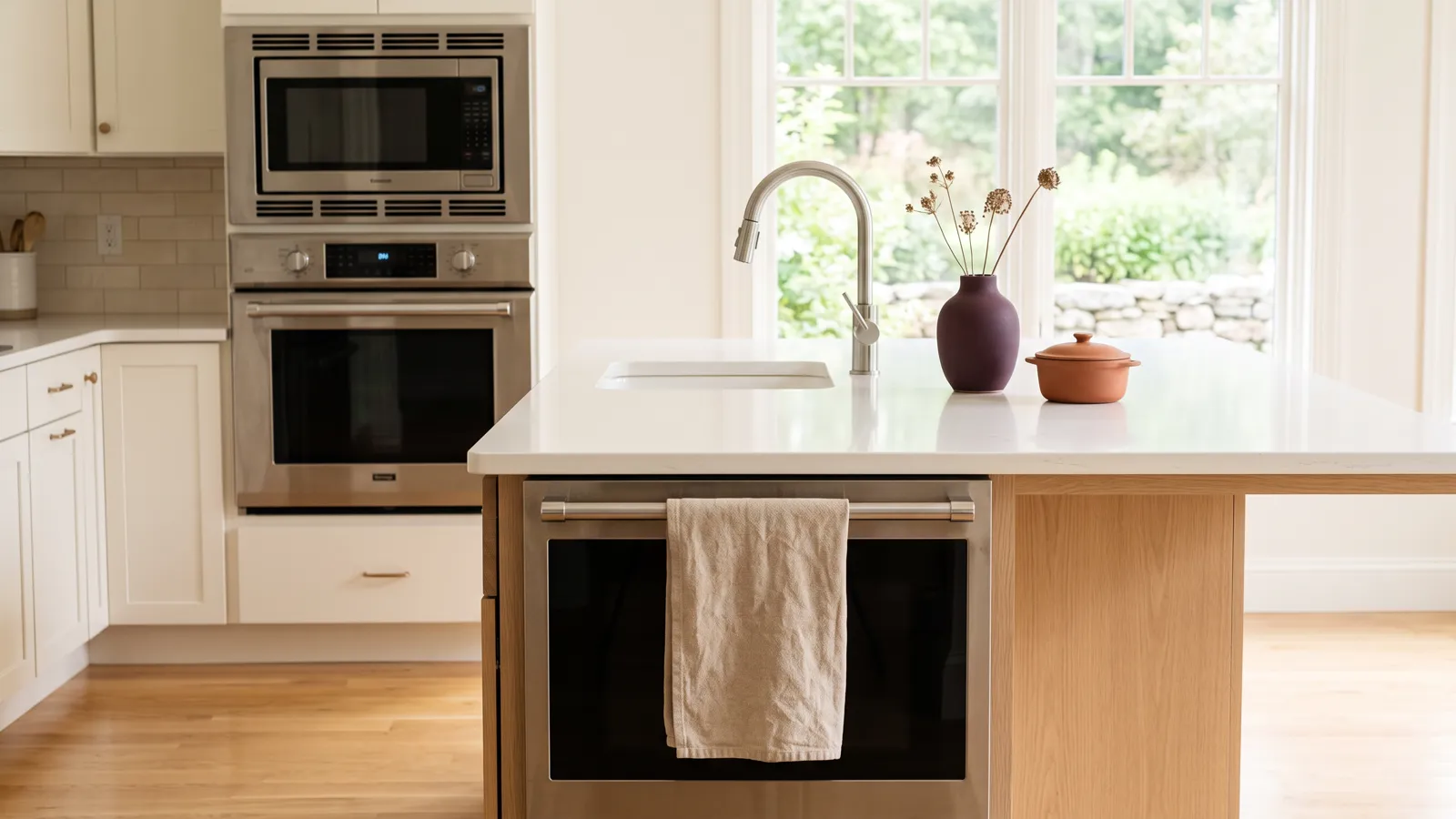
The kitchen takes the longest. Cabinet fronts and the range hood hold a film of cooking grease that needs a degreasing product and a few minutes of dwell time rather than pressure. The inside of the refrigerator and the oven are usually add-ons, so decide on them before the visit. If the refrigerator is on the list, it is worth doing then: the FDA advises keeping the refrigerator at or below 40°F, cleaning it regularly and wiping spills immediately, because drips from thawing meat can spread bacteria from one food to another.
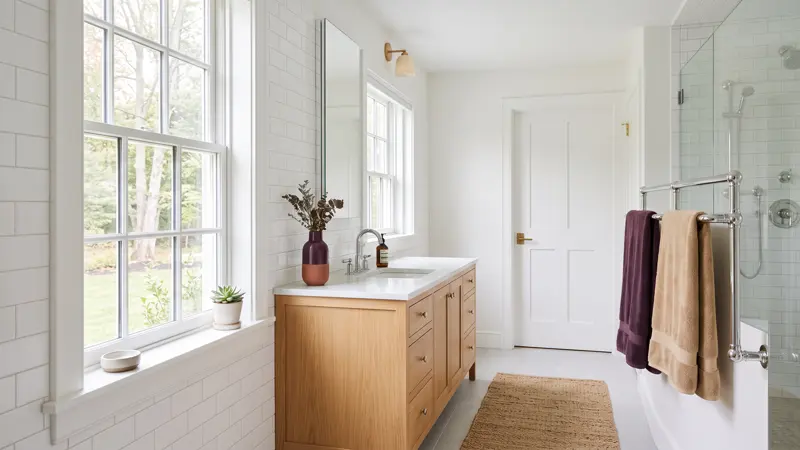
Bathrooms come second. Grout lines, shower door tracks, the toilet base and its bolts, the underside of the seat, the exhaust fan cover and hard-water film on glass and metal all sit outside a quick weekly pass. Mirrors and glass are checked under side light, which is where streaks actually show.
Where should you start when deep cleaning a house?
Start at the top of the first room and finish that room before moving on. The order below keeps you from cleaning the same spot twice.
- Clear the surfaces. Counters, nightstands and floors need to be empty enough to reach what is underneath.
- Gather what you need for the room so you are not walking back and forth for a cloth.
- Dust from the top down: ceiling fans, light fixtures, shelf tops, door frames, blinds.
- Move to the vertical surfaces: doors, switch plates, handles, wall marks, then baseboards.
- Do the wet rooms next, giving bathroom and kitchen products time to work instead of scrubbing harder.
- Clean glass and mirrors after the wet work, so splashes do not land on finished glass.
- Floors last. Vacuum or sweep before any mopping, so grit is not dragged across the finish.
- Walk the room again under room light and natural light, then put personal items back exactly where they were.
Which cleaners are safe on which surfaces?
Match the product to the surface before you match it to the mess. Two surfaces in most homes are easy to damage permanently: sealed wood and natural stone.
| Surface | Use | Avoid |
|---|---|---|
| Sealed hardwood | A pH-balanced wood floor cleaner on a damp, well-wrung mop; sweep or dust first | Soaking wet mops, standing water, bleach or ammonia-based cleaners |
| Granite, marble, other natural stone | Neutral stone cleaner, stone soap or a little mild dish detergent in warm water, then rinse and dry | Vinegar, lemon and other acids, scouring powders and creams, abrasive pads |
| Glazed tile and grout | A bathroom cleaner left to dwell, then a soft brush on the grout lines | Abrasive pads on glazed tile and on fittings |
| Glass and mirrors | Glass cleaner, then a dry microfiber finish checked under side light | Letting product dry on the glass, which is what leaves streaks |
| Stainless steel, faucets, metals | Mild detergent, then dried and polished | Abrasive powders, leaving bleach in contact with metal |
The National Wood Flooring Association is direct about wood: never leave the floor wet, because excess water can seep into the seams and damage the wood, and avoid bleach or ammonia-based cleaners, which can strip the finish and cause permanent damage. The Natural Stone Institute recommends a neutral cleaner, stone soap or mild dishwashing detergent and warm water, and warns that products containing lemon, vinegar or other acids may dull or etch calcareous stones, while scouring powders may scratch. Spills on stone get blotted, not wiped, so they do not spread.
What a deep clean does not include
A deep clean is still cleaning. Work that changes a surface rather than cleans it belongs to another trade: sanding or refinishing floors, polishing stone, painting, duct work and junk removal.
A few tasks sit on the line and are usually arranged separately: inside cabinets and pantry organization, the inside of the refrigerator and the oven, laundry, dishes, and exterior window work, which is normally excluded when it needs a ladder. At Andemora, cabinet interiors and pantry organization are arranged with each client for an extra fee, and the refrigerator and oven are add-ons quoted by the condition of the appliance. Ask for the checklist before the visit and there is nothing to guess about afterward.
What changes in a New England home
Three things move items up the list in Southern New Hampshire and the Merrimack Valley. From December through March, salt and sand ride in on boots and settle along baseboards, in stair corners and in the grout at the entries, so those edges need a deep pass more than once over the winter. In spring, pollen lands on sills, blinds and screens.
Summer humidity is the one with consequences. The EPA recommends keeping indoor humidity below 60 percent, ideally between 30 and 50 percent, running the bathroom fan or opening a window when showering, and drying damp areas quickly: if wet or damp materials are dried 24 to 48 hours after a leak or spill, in most cases mold will not grow. That is why the fan cover, the window tracks and the silicone lines belong on a bathroom deep-clean list here, not just the tile.
How a first deep clean works at Andemora
Every new client starts with a Deep Clean, because a recurring visit can only hold a level that has already been set. Rayane Moura has been cleaning homes in Southern New Hampshire and the Merrimack Valley since 2020, and the first visit follows the four steps of the Triple-A Standard: arrival on time and uniformed, with our own supplies and a message on the way; execution top to bottom, back of the house to the front door, with personal items returned to their exact place; a walkthrough where every room is re-checked against the checklist under room light and natural light; and lock-up, with lights off, doors locked and a message that the home is ready.
The details are the work. Mirrors and glass streak-free under side light, faucets and metals dried and polished, baseboards and stair corners dust-free, fresh bin liners, towels folded the same way, a neutral clean scent instead of heavy perfume. Supplies are included and the products are safe for kids and pets. You can see what each service covers or ask for an estimate for your home.
Frequently asked questions
Is a deep clean the same as spring cleaning?
Spring cleaning is a time of year; a deep clean is a scope of work. The same task list applies in October or February.
Should I tidy up before a deep clean?
Clearing counters, nightstands and floors helps, because a surface that is covered is a surface that cannot be cleaned. Nothing else is needed on your side.
Does a deep clean include inside the oven and the refrigerator?
The inside of the microwave is part of every Andemora visit. The refrigerator and the oven are add-ons, quoted by the condition of the appliance. The FDA advises cleaning the refrigerator regularly and wiping spills right away, so it is worth adding when the shelves have not been washed in a while.
Is a deep clean a one-time job?
It is the first visit, not the only one. Once the level is set, recurring weekly, bi-weekly or monthly visits are what hold it.
Will a deep clean get rid of mold in the bathroom?
The EPA says to scrub mold off hard surfaces with detergent and water and dry completely, which removes what is there. If it returns in the same spot, the cause is moisture, and ventilation or a leak has to be fixed.
Sources
- When and How to Clean and Disinfect Your Home · CDC
- Selected EPA-Registered Disinfectants · EPA
- A Brief Guide to Mold, Moisture and Your Home · EPA
- Improving Indoor Air Quality · EPA
- Cleaning Products and Care for Natural Stone · Natural Stone Institute
- How to Clean and Take Care of Your Wood Floors · National Wood Flooring Association
- Are You Storing Food Safely? · FDA