Turnover cleaning is the complete reset of a short-term rental between one guest's checkout and the next guest's check-in. It covers every room, fresh linens and towels, restocked supplies and a final check, so the home looks the same for each arrival. It runs on a fixed window, which is what sets it apart from regular house cleaning.
What is turnover cleaning, in plain terms?
It is cleaning on a clock, with a guest waiting at the other end. The word "turnover" comes from hospitality, where a room is turned over from one occupant to the next.
In a home you live in, a cleaning visit can move around your week. In a rental, checkout might be at 11 and check-in at 3 or 4. Everything has to fit inside that gap, and the result has to be ready without anyone coming back to fix it.
That is why turnover work runs on a checklist. The same steps, in the same order, every time. The guest who arrives on a Sunday in February should find the same home as the guest who arrived on a Friday in July.
How does Airbnb cleaning work between guests?
The cleaner arrives after checkout, resets the home and leaves it ready before the next check-in. The host usually does not need to be there.
A typical sequence looks like this:
- Walk in and assess. Open windows if the weather allows, note anything broken or missing, and check for items guests left behind.
- Strip the beds and gather towels. Start the laundry first if it is done on site, since it takes the longest.
- Clear the trash and dishes. Empty every bin, run or unload the dishwasher, and put kitchenware back in its place.
- Clean top to bottom, back to front. Start in the rooms farthest from the entrance and finish at the front door, so no one walks across a finished floor.
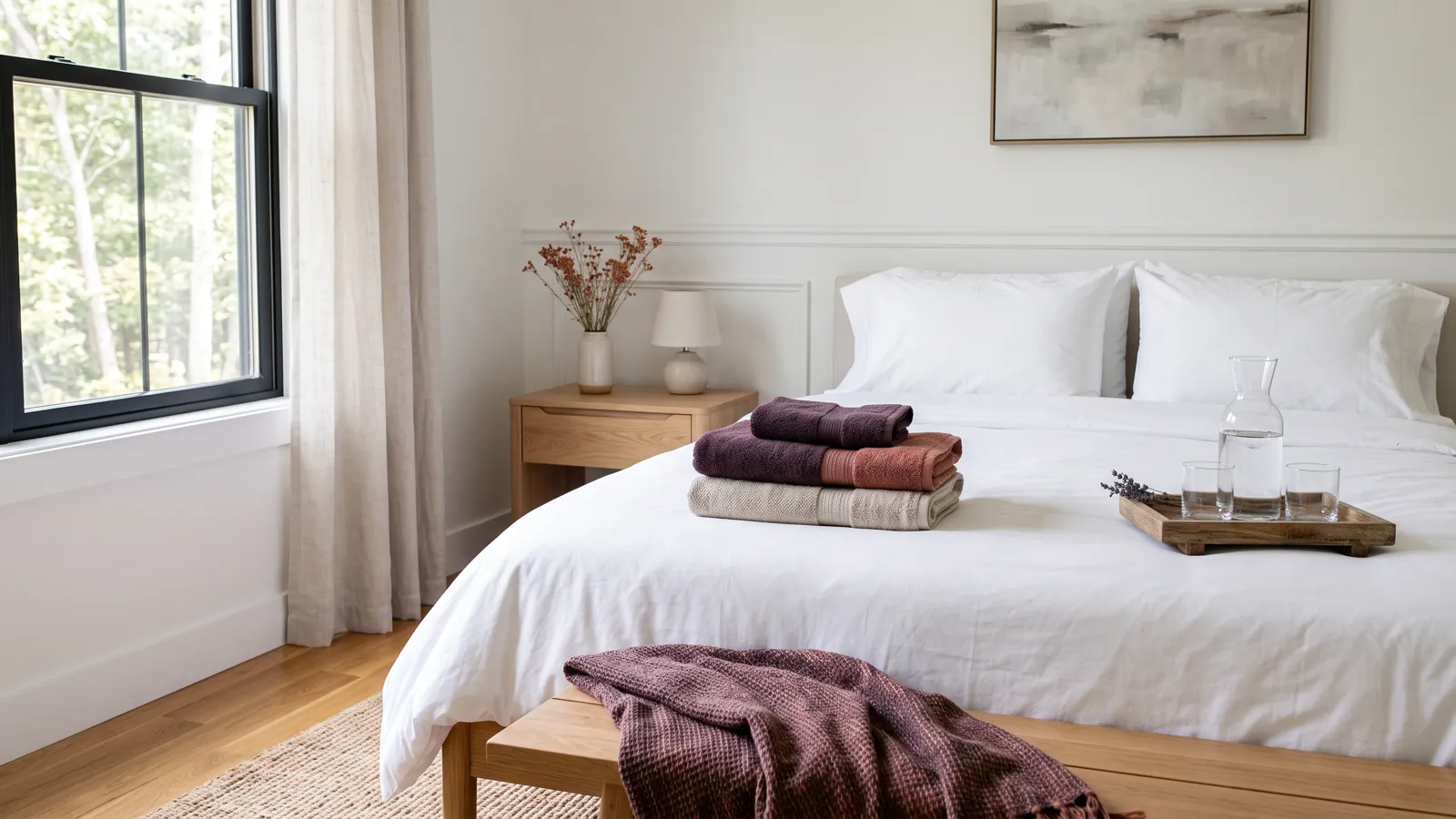
- Make the beds and set the towels. Fold and place them the same way every time.
- Restock. Toilet paper, soap, bin liners, and whatever else the host provides for guests.
- Walk through and lock up. Re-check every room, turn off the lights, lock the doors and let the host know the home is ready.
Most hosts coordinate this through a shared calendar, so the cleaner sees each checkout as soon as a booking comes in. Same-day turnovers are the norm, which is why a reliable arrival time matters as much as the cleaning itself.
What does a turnover clean include?
A turnover covers every room a guest can use, plus the supplies and presentation that make the home feel ready. Here is a room-by-room outline.
| Area | What gets done |
|---|---|
| Bedrooms | Fresh linens, beds made, surfaces dusted, under-bed check for left items, floors vacuumed |
| Bathrooms | Toilet, shower, tub and sink cleaned; mirrors streak-free; faucets dried and polished; fresh towels; toiletries restocked |
| Kitchen | Counters, sink and stovetop cleaned; microwave inside and out; appliance fronts wiped; dishes put away |
| Living areas | Surfaces dusted, cushions straightened, remotes and switches wiped, floors vacuumed and mopped |
| Entry | Floor cleaned, door handle wiped, welcome items in place |
| Whole home | Every bin emptied with a fresh liner, lights and thermostat checked, nothing left behind |
Refrigerator and oven interiors, inside cabinets and the pantry are usually extra tasks. A host can add them on a regular rotation instead of every turnover, based on how the home is used.
How is turnover cleaning different from regular house cleaning?
The difference is the purpose. A regular cleaning keeps your own home in good shape between visits. A turnover prepares a home for a stranger who will judge it the moment the door opens.
That changes a few things:
- Time. Turnovers happen in a fixed window, often the same day.
- Presentation. Beds are made to a set standard, towels folded the same way, supplies placed where the guest expects them.
- Inspection. The cleaner reports damage, missing items and anything that needs a repair before the next stay.
- Records. Hosts who manage from a distance often want photos of the finished home.
For a closer look at how routine and deep visits compare, see deep cleaning vs. regular cleaning. A rental that has not had a full deep clean in a while benefits from one before its busy season.
Is Airbnb cleaning considered commercial or residential?
The work itself is residential. It happens in a house or apartment, with home furniture, home appliances and home surfaces.
What makes it feel commercial is the rhythm. Turnovers follow booking calendars, need consistent results for every guest, and often include reporting to an owner who is not on site. Think of it as residential cleaning run with hospitality discipline.
If you are asking for tax, zoning or insurance reasons, that is a question for your accountant or your town, since the rules vary by place.
Should you disinfect between guests?
Clean every surface every time, and disinfect the high-touch ones when there is a reason to. The CDC explains that cleaning removes most germs, dirt and impurities, while disinfecting kills most germs that remain, and that surfaces need to be cleaned before they are disinfected.
The CDC recommends disinfecting when someone in the home is sick, or when someone at higher risk will be staying. In a rental, you rarely know either. Many hosts treat light switches, doorknobs, remotes, faucet handles and counters as the priority list, which matches the high-touch examples the CDC gives.
When you do disinfect, the label is the instruction manual. The EPA says a disinfectant only works if the surface stays visibly wet for the full contact time listed on the product. If it dries early, apply more.
For laundry, the CDC notes that detergent with the warmest water the fabric allows, followed by complete drying, is enough, even for linens used by someone who was sick.
What should a cleaner check during a turnover?
A good turnover is part cleaning, part inspection. The cleaner is often the only person who sees the home between stays.
The most useful checks:
- Damage and wear. Stains, chips, broken glasses, a loose towel bar.
- Missing items. Remotes, kitchen tools, extra blankets.
- Supplies. What is running low before the next restock.
- Signs of pests. The EPA lists reddish stains on sheets or mattresses, small dark spots, tiny pale eggshells and live bugs as signs of bed bugs. It notes they hide along the piping, seams and tags of mattresses and box springs, and in cracks on the bed frame and headboard. Early detection makes treatment much easier.
- Moisture. Wet spots under sinks, a running toilet, or a musty bathroom.
Anything found goes to the host right away, ideally with a photo, so it can be handled before the next check-in.
A note for New England rentals
Seasons change what a turnover has to watch. In humid summers, bathrooms in rentals that sit closed between stays can turn musty fast. The EPA recommends keeping indoor humidity below 60 percent, ideally between 30 and 50, and running a fan or opening a window when showering. A bathroom fan left on a timer and a dehumidifier in a basement unit help between guests.
In winter, salt and slush come in on every pair of boots. A washable mat at the entry and a mop at every turnover keep the residue off the floors. Heavier tasks, such as washing blankets or cleaning inside cabinets, fit best in the quieter weeks between busy seasons.
How Andemora handles turnovers
Andemora's Turnover Cleaning follows the Triple-A Standard on every visit. The team arrives on time, uniformed and with its own supplies, and sends a message on the way. The home is cleaned top to bottom, from the back of the house to the front door, then every room is re-checked against the checklist under room light and natural light.
At lock-up, the lights go off, the doors are locked, and the host gets a message that the home is ready, along with a photo report. Towels are folded the same way every time, bins get fresh liners, and the scent stays neutral. Keys, codes and routines are never discussed with anyone.
If you host in Southern New Hampshire or the Merrimack Valley, you can see all services or request an estimate for your rental.
Frequently asked questions
How long does a turnover clean take?
It depends on the size of the home, the number of beds and how the last guests left it. Most hosts plan the cleaning window around their checkout and check-in times, then set the scope to fit.
Should the host or the cleaner do the laundry?
Either works, as long as it is agreed in advance. Many hosts keep a second set of linens and towels on site so the beds can be made right away while the used set is washed.
Do guests have to clean before they leave?
That depends on the house rules the host sets. Even when guests tidy up, a full turnover still happens, because the next guest expects the same standard as the first.
What should a host leave for the cleaner?
Clear access instructions, a stocked supply closet with spare linens and guest supplies, and a short note on anything specific to the home, such as a surface that needs a particular product.
Sources