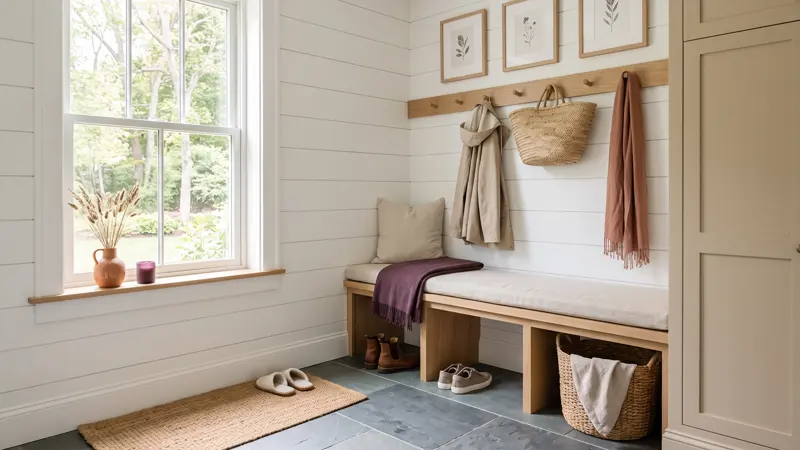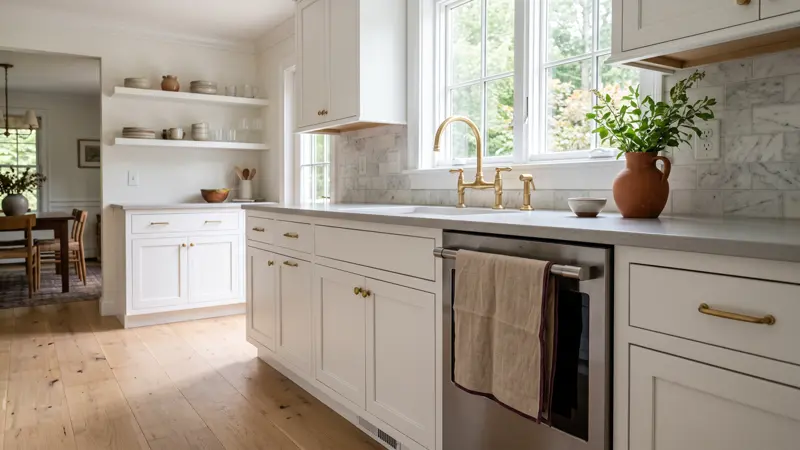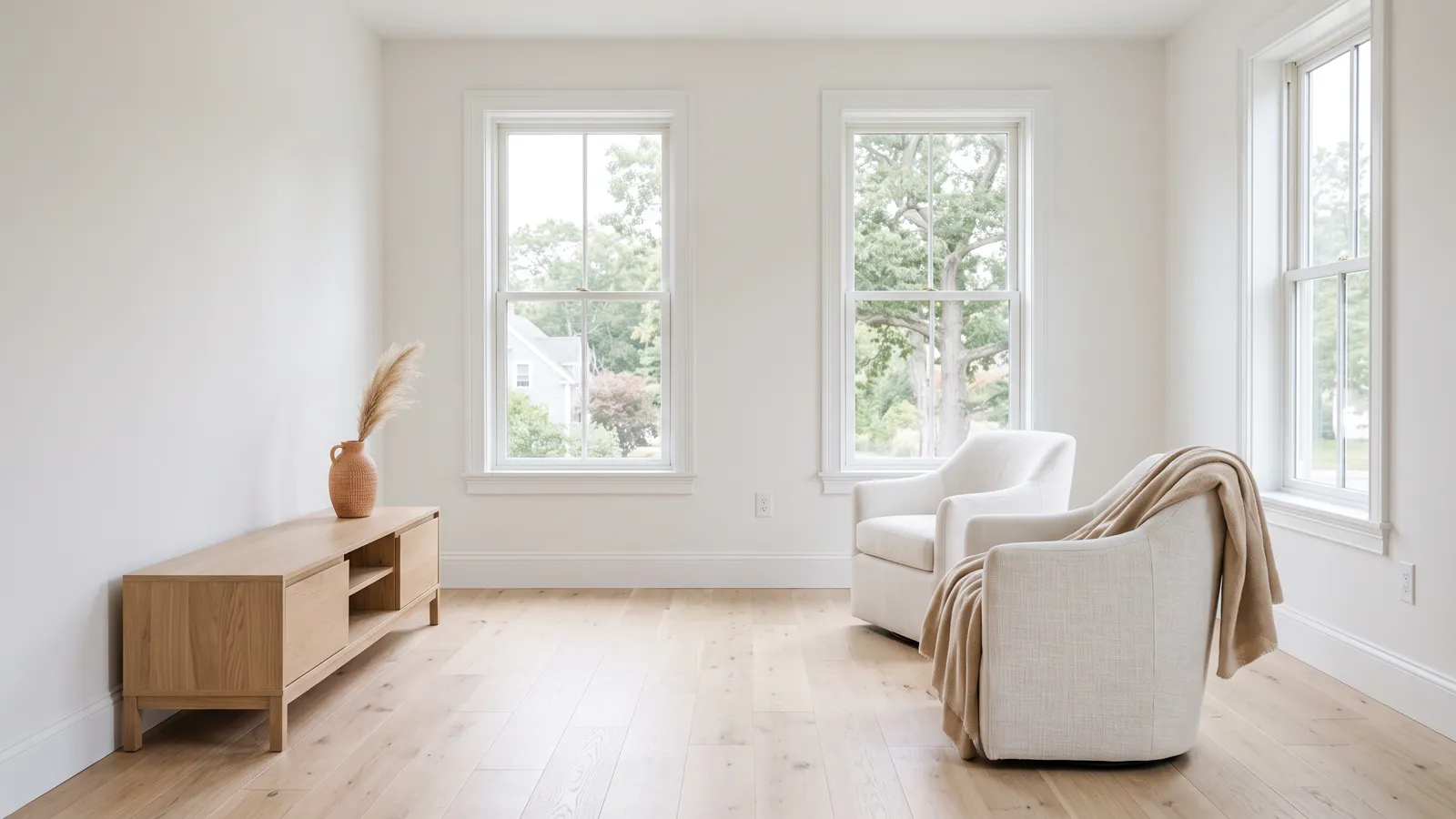
New construction cleaning is the final clean of a brand-new home before anyone moves in. It removes drywall dust, sawdust, adhesive film, grout haze and paint flecks, along with the labels and stickers left on new windows, appliances and fixtures. The goal is a house ready for furniture.
What is new construction cleaning?
New construction cleaning is the last step of a build: a top-to-bottom clean of a never-occupied home once the trades are out and before the moving truck arrives. It deals with construction residue, not household soil, because nobody has cooked, showered or tracked in mud yet.
What makes it its own category is the kind of dirt. A new house holds fine drywall and joint-compound dust where no one thinks to look: tops of door casings, inside light fixtures, window tracks, inside new cabinets, the ridges of new baseboard. On top of that sits manufacturing residue: protective film on glass and appliances, stickers on window panes, haze on new tile, overspray on hardware.
New construction cleaning, final clean and construction clean up all describe the same work, and builders often split it into a rough clean during the build and a final clean at the end.
What does new construction cleaning include?
It includes every surface from the ceiling down, including the places that disappear once you move in. A typical scope for a new build:
| Area | What is cleaned |
|---|---|
| Ceilings, walls, trim | Ceiling corners, walls, trim and tops of door casings dusted; light fixtures and fan blades wiped |
| Windows and doors | Labels and adhesive removed; interior glass streak-free; frames, sills and tracks vacuumed, then wiped |
| Vents and registers | Covers vacuumed and wiped once the dusty work is over |
| Kitchen | Cabinet fronts, tops and handles; counters and backsplash; sink and faucet; appliance exteriors and protective film; inside the microwave |
| Bathrooms | Tub, shower, glass, new tile and grout haze, toilet, vanity, mirrors and fixtures |
| Outlets, switches, hardware | Plates and hardware wiped with a barely damp cloth; paint flecks lifted where the finish allows |
| Closets and shelving | Shelves, rods and closet floors wiped, since sawdust settles there and stays |
| Baseboards and stairs | Baseboards, stair treads, edges and corners dust-free |
| Floors | Vacuumed first, then cleaned by material; new carpet vacuumed thoroughly |
A few items are usually scoped on their own rather than assumed: inside new cabinets and drawers, inside the refrigerator, inside the oven, and glass that needs a ladder. Ask for them by name when you book.
Do you need to clean a new build before moving in?
Yes. A new home looks clean because the surfaces are new, but construction dust is still in it, and empty rooms are the one chance to remove it completely. Once rugs, upholstery and boxes arrive, fine dust has somewhere to hide.
Air matters as much as surfaces here. The EPA notes that building a new home "can result in exposure to higher levels of indoor air contaminants if careful attention is not given to potential pollution sources and the air exchange rate." New paint, varnish, adhesives and building materials release volatile organic compounds, and the EPA says concentrations of many VOCs are consistently higher indoors than outdoors. Increase ventilation while these products are in use, and follow the manufacturer's directions. For new carpet, the EPA says to run window fans or other mechanical ventilation during installation and to "keep them running for 48 to 72 hours after the new carpet is installed."
Then there is the heating and cooling system. The EPA advises that "during construction or renovation work that produces dust in your home, seal off supply and return registers and do not operate the heating and cooling system until after cleaning up the dust." Change the filter when the work is done, and sooner if it clogs. The EPA does not recommend routine duct cleaning.
Which new surfaces need the most care on the first clean?
New finishes are the easiest to damage, and the first clean is when damage tends to happen. Three are worth naming.
New stone counters. The Natural Stone Institute recommends "a neutral cleaner, stone soap, or a mild liquid dishwashing detergent and warm water," then rinsing thoroughly and drying with a soft cloth. It warns that "products containing lemon, vinegar or other acids may dull or etch calcareous stones" like marble and travertine, and that scouring powders and creams "often contain abrasives that may scratch certain stones."
New wood floors. The National Wood Flooring Association describes routine care as "sweeping, dust mopping, or vacuuming using the bare floor setting," and is direct about equipment: "Don't use wet mops or steam mops, which will damage the finish and the wood over long periods of time." It recommends a cleaner made specifically for the finish on your floor, so ask the builder which finish you have.
Leftover cutting dust. Tile, stone and masonry work leaves very fine dust behind. CDC NIOSH lists sand, concrete, brick, cement, mortar, plaster, granite and engineered stone among materials containing crystalline silica, and notes that "work activities such as cutting, grinding, polishing, and drilling can generate dust" from them. That dust is captured with a vacuum and damp cloths, not dry swept.
Who cleans a house after it is built?
Usually two crews, at two moments. The builder's team does a construction clean up: debris out, floors swept, the house presentable for the walkthrough. A residential cleaning service does the detail clean that makes it livable.
The gap between the two is where disappointment lives: "broom clean" in a contract can mean the debris is gone and nothing more. Ask what cleaning is included before closing, whether labels and protective film come off, and whether the inside of cabinets is part of it. If the answers are thin, book your own clean after the walkthrough and before the truck, the timing question covered in whether to deep clean a house before moving in.
How is new construction cleaning different from post-renovation cleaning?
The dust is similar; the house is not. A renovation puts fine dust into a furnished, occupied home, so containment shapes the work. A new build is empty, which makes each room faster but the scope much wider: every window label, every cabinet interior, every closet shelf.
One difference works in your favor. The EPA requires anyone paid to disturb painted surfaces in homes built before 1978 to be certified in lead-safe practices, since about three-quarters of pre-1978 US homes still contain some lead-based paint. In a brand-new home that question does not arise, which is not true of the renovation work described in what post-construction cleaning includes.
What affects new construction cleaning prices?
Size and condition, mostly, and then everything that has to be done by hand. New construction cleaning rates are quoted after a walkthrough because two identical floor plans can need very different amounts of time.
- Square footage, and the number of bathrooms. Kitchens and bathrooms carry the most fixtures per square foot.
- How much dust is still in the house. A home cleaned as the build went along is a different job.
- Window count, and whether labels and film are still attached. Adhesive removal is slow, careful work.
- Grout haze and paint overspray. Both come off, and both come off by hand.
- Materials. Stone, fresh grout and new wood finishes decide which products can be used.
- Named extras. Inside cabinets, inside the refrigerator, inside the oven, glass that needs a ladder.
The same logic drives renovation quotes, broken down in what affects a post-construction cleaning quote.
What is specific to a new build in New England?
Timing and weather, more than method. A house finished in February is cleaned with the windows shut and the heat running, which is when sealed registers and a fresh filter matter most. A house finished in mud season collects a week of grit across brand-new floors, so mats belong inside and outside each entrance on day one: the Natural Stone Institute notes that "sand, dirt and grit are abrasive" on stone floors.
New subdivisions across Southern New Hampshire and the Merrimack Valley also finish in batches, so the lot next door may still be an active site after you move in. Expect outside dust for a while.
How Andemora handles new construction cleaning
Post-Construction Cleaning at Andemora covers new builds as well as renovations, and follows the Triple-A Standard like every visit. The team arrives on time and uniformed, with its own supplies and a message on the way, then works top to bottom and from the back of the house to the front door.
The scope, stated plainly: inside the microwave is included. Inside cabinets and pantry organization are arranged separately with you, for an extra fee. Inside the refrigerator and inside the oven are add-ons, quoted by the condition of the appliance. Abrasive products never touch natural stone or wood.
Before we leave, every room is re-checked against the checklist under room light and natural light, which is where dust film on new trim shows. Then the lights go off, the doors are locked, and you get a message that the home is ready. If your build is close to done, you can request an estimate.
Frequently asked questions
Is new construction cleaning the same as a deep clean?
No. A deep clean resets a home that has been lived in, working on build-up from cooking, bathing and daily traffic. New construction cleaning removes construction residue from a house nobody has used yet.
When should new construction cleaning be scheduled?
After the last dusty task is finished and ideally after the final walkthrough, but before furniture and boxes arrive. An empty house cleans faster and more completely.
Will one cleaning be enough for a brand-new house?
Often there is a second, lighter pass a few weeks later. Fine dust keeps working its way out of a new building, and in a new subdivision the lots nearby may still be active sites.
Should the furnace filter be changed after a new build?
Yes. The EPA advises using the highest efficiency filter the manufacturer recommends, changing filters regularly, and changing them more frequently if they become clogged.
Does new construction cleaning include the outside of the windows?
Interior glass, frames, sills and tracks are normally part of the scope. Exterior glass above ground level is usually a separate window-cleaning trade, so confirm it rather than assume it.
Sources
- The Inside Story: A Guide to Indoor Air Quality · EPA
- Volatile Organic Compounds' Impact on Indoor Air Quality · EPA
- Should You Have the Air Ducts in Your Home Cleaned? · EPA
- Lead Renovation, Repair and Painting Program · EPA
- When and How to Clean and Disinfect Your Home · CDC
- About Respirable Crystalline Silica · CDC NIOSH
- Learn About Cleaning Products for Natural Stone · Natural Stone Institute
- Maintenance · National Wood Flooring Association