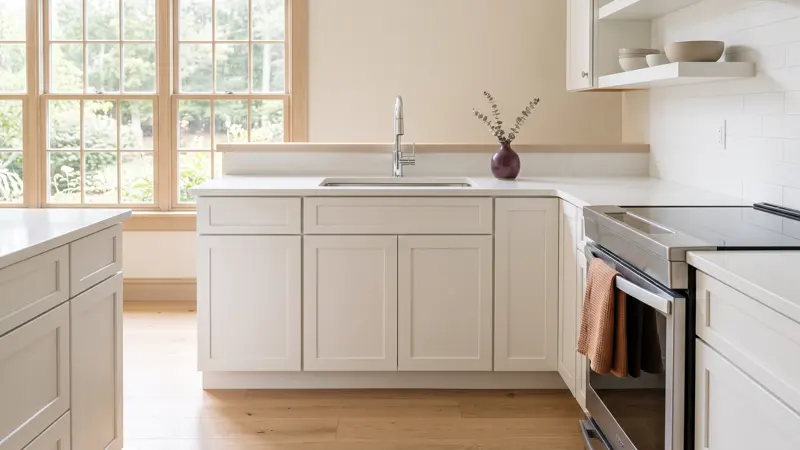
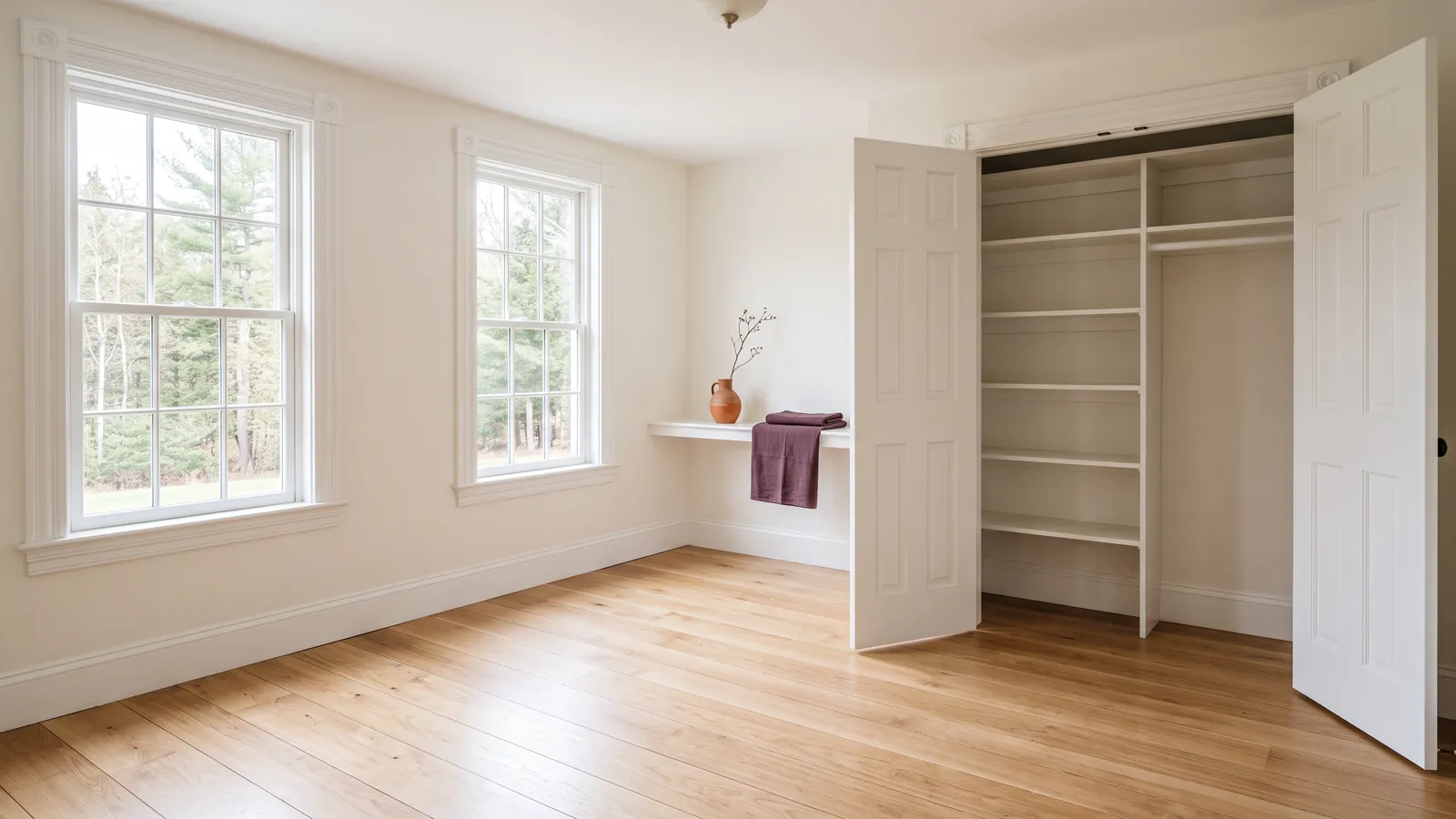
Yes. An empty house gives you access you will not have again: bare floors, open closets, clear counters, and no furniture to work around. Whether you should deep clean a house before moving in is mostly a question of timing. Book it for the gap after the sellers leave and before your boxes arrive.
Should you deep clean a house before moving in?
You should, for one practical reason: you do not know how the last household cleaned, and this is the only week you can check. Every surface is visible, so a pre-move-in clean doubles as an inspection of the floors, sills and walls.
It also puts the surfaces your family touches first in known condition. The CDC notes that cleaning with soap and water removes most germs, dirt and impurities from surfaces, and it names light switches, doorknobs and countertops among the high-touch surfaces worth regular cleaning. Those are exactly the things you will touch on day one.
The last reason is simple arithmetic. Baseboards, closet shelves and the floor under where a sofa stood take minutes in an empty room and half an hour once boxes are stacked against the wall. Work done now does not have to be done twice.
When should the clean happen?
The clean belongs in the gap between the two moves. Trying to clean around movers means the floors get walked on again before they dry.
- Confirm access. Agree on how keys or door codes change hands, and share them only with the people who need them.
- Check the utilities. Water, power and lighting need to be on, both for the cleaning and for seeing the result.
- Wait until the house is truly empty. That includes closets, the basement shelf and anything left under a sink.
- Finish before the truck arrives. For a same-day move, the clean has to be booked first thing.
- Walk through afterward. Check each room with the lights on and again in daylight. Side light shows streaks that overhead light hides.
Where should you start when the house is empty?
Start at the back of the house and work toward the front door, and inside each room work from the top down. Floors come last, so nothing clean gets walked on. In an empty house you can follow that order strictly, which is why the result holds up.
| Order | Area | What matters most in an empty house |
|---|---|---|
| 1 | Bedrooms and back rooms | Ceiling corners, light fixtures within reach, closet shelves and rods, window sills and tracks, door frames, switches |
| 2 | Bathrooms | Tub and shower, tile surface, toilet inside and out, vanity and sink, mirrors, faucets dried and polished, exhaust fan cover |
| 3 | Kitchen | Counters, backsplash, cabinet fronts and handles, sink and faucet, stovetop, microwave inside and out, appliance exteriors |
| 4 | Hall, stairs and entry | Stair treads and corners, railings, baseboards, doors and thresholds, closet |
| 5 | Floors | Wet-mop or vacuum room by room, finishing at the front door |
What if the house is new or just renovated?
A new build or a fresh renovation needs the same clean plus attention to dust. Fine dust keeps settling for days on trim, the tops of doors, closet shelves and inside cabinets, so it usually takes more than one pass.
Handle it wet rather than dry, and keep the air moving. The EPA describes source control and improved ventilation as the two most effective ways to improve indoor air, and recommends opening windows and doors or running fans, which matters most during work like sanding. If your move follows a renovation, see what post-construction cleaning includes.
Do you need to disinfect before moving in?
For most move-ins, cleaning is enough. The CDC advises that regular cleaning with soap or detergent is sufficient to prevent the spread of germs in the home, and reserves disinfecting for when someone is sick or someone is at higher risk of getting sick due to a weakened immune system.
If you do reach for a disinfectant, the CDC says to read and follow the label directions, wear the recommended protection such as gloves, ventilate the room with a fan or open windows, and never mix products with each other. The EPA is specific about the worst combination: never mix chlorine bleach with cleaners or detergents that contain ammonia, because toxic fumes can form.
What is different about older New England homes?
Much of the housing stock in Southern New Hampshire and the Merrimack Valley predates 1978, and that changes how the dust should be handled. The EPA states that roughly three-quarters of US homes built before 1978 still contain some lead-based paint, and that worn paint on friction surfaces such as doors and window sills can produce chips and dust.
Its advice is to keep those surfaces damp: wipe countertops, window sills and door jambs with a damp sponge, cloth or paper towel, and wet-mop hard floors rather than dry-sweeping them. In an older home, that is the right default for the sills and floors a move-in clean spends the most time on.
Moisture is the other local factor, especially after a humid summer or a house that sat closed for a season. The EPA recommends keeping indoor humidity below 60 percent, ideally between 30 to 50 percent, and says that wet or damp areas dried within 24 to 48 hours will usually not grow mold. Check bathrooms, closets and the basement before you unpack.
Water that has been sitting in the plumbing of an empty house deserves a minute too. The EPA advises cleaning faucet screens, also called aerators, because sediment, debris and lead particles can collect there, and using only cold water for drinking, cooking and making formula. Flushing times depend on your plumbing, so ask your water utility what it recommends locally.
What is usually not part of a pre-move-in clean?
A base clean covers what can be reached and seen. A few jobs are normally quoted separately, and knowing that before moving day avoids a surprise.
- Inside cabinets and the pantry. Wiping every shelf and drawer interior is real time, so it is arranged as an extra.
- Inside the refrigerator and the oven. These depend entirely on condition, so they are quoted once someone has looked at them.
- Exterior windows, garages and outdoor areas. Outside the scope of an interior clean.
- Repairs and painting. Nail holes, scuffed paint and worn flooring are maintenance, not cleaning.
- Larger mold areas. The EPA advises that if the moldy area is larger than about 10 square feet, roughly a 3-foot by 3-foot patch, you should consult a professional rather than handle it yourself.
How Andemora handles a pre-move-in clean
Andemora treats this as its own service. Move In / Move Out is built for an empty home, and every new client starts with a Deep Clean, so the first visit is the thorough one either way. Inside the microwave is part of the clean. Inside cabinets and the pantry are arranged separately, and refrigerator and oven interiors are add-ons quoted by condition, so the scope is agreed before the day.
Each visit follows the Triple-A Standard: arrival on time with our own supplies and a message on the way, work from the top down and from the back of the house to the front door, then a walkthrough of every room against the checklist under room light and natural light. At lock-up, the lights go off, the doors are locked, and you get a message that the home is ready.
If you are moving in Southern New Hampshire or the Merrimack Valley, you can request an estimate. For the full scope of an empty-home clean, see what move-in and move-out cleaning includes, or read what a deep clean of a house covers room by room.
Frequently asked questions
Is the seller supposed to clean the house before closing?
That is decided by your purchase agreement or lease, not by custom, so read what yours says. Standards vary from one household to the next, so most buyers plan their own clean regardless.
Can I deep clean a house myself before moving in?
Yes, as long as you give it a full day or two and keep the order: top to bottom, floors last. The part people underestimate is the kitchen and the closet shelves.
Should I clean inside the kitchen cabinets before moving in?
Wiping shelves and drawer interiors before you load dishes is worth the time, since it is much harder once the kitchen is full. With a cleaning service this is usually arranged separately from the base clean.
What if the previous owners had pets?
Start with hard floors, baseboards and any vent covers you can reach, and keep windows open while you work. The EPA lists removing the source and improving ventilation as the two main ways to improve indoor air.
Do I still need a clean if the house is brand new?
New construction leaves fine dust on trim, tops of doors and closet shelves for days after the crews finish. A wet-cleaning pass before the furniture arrives keeps that dust from circulating later.
Sources