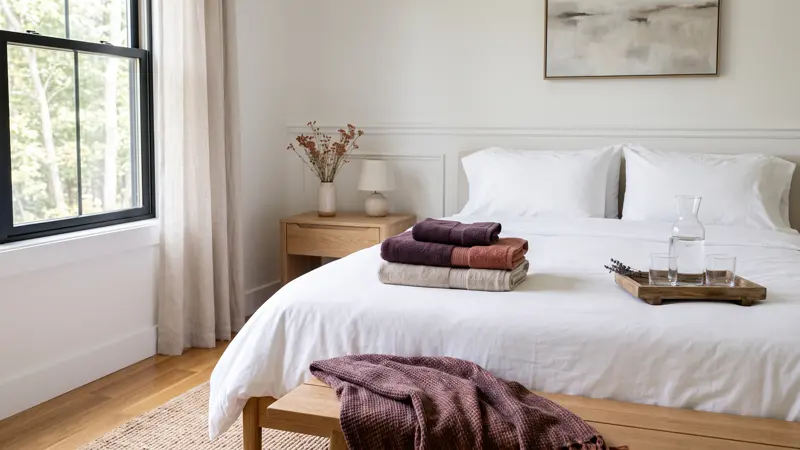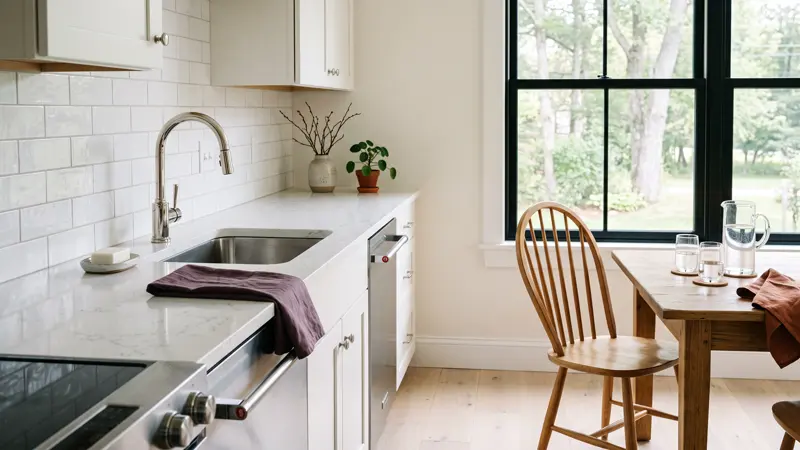
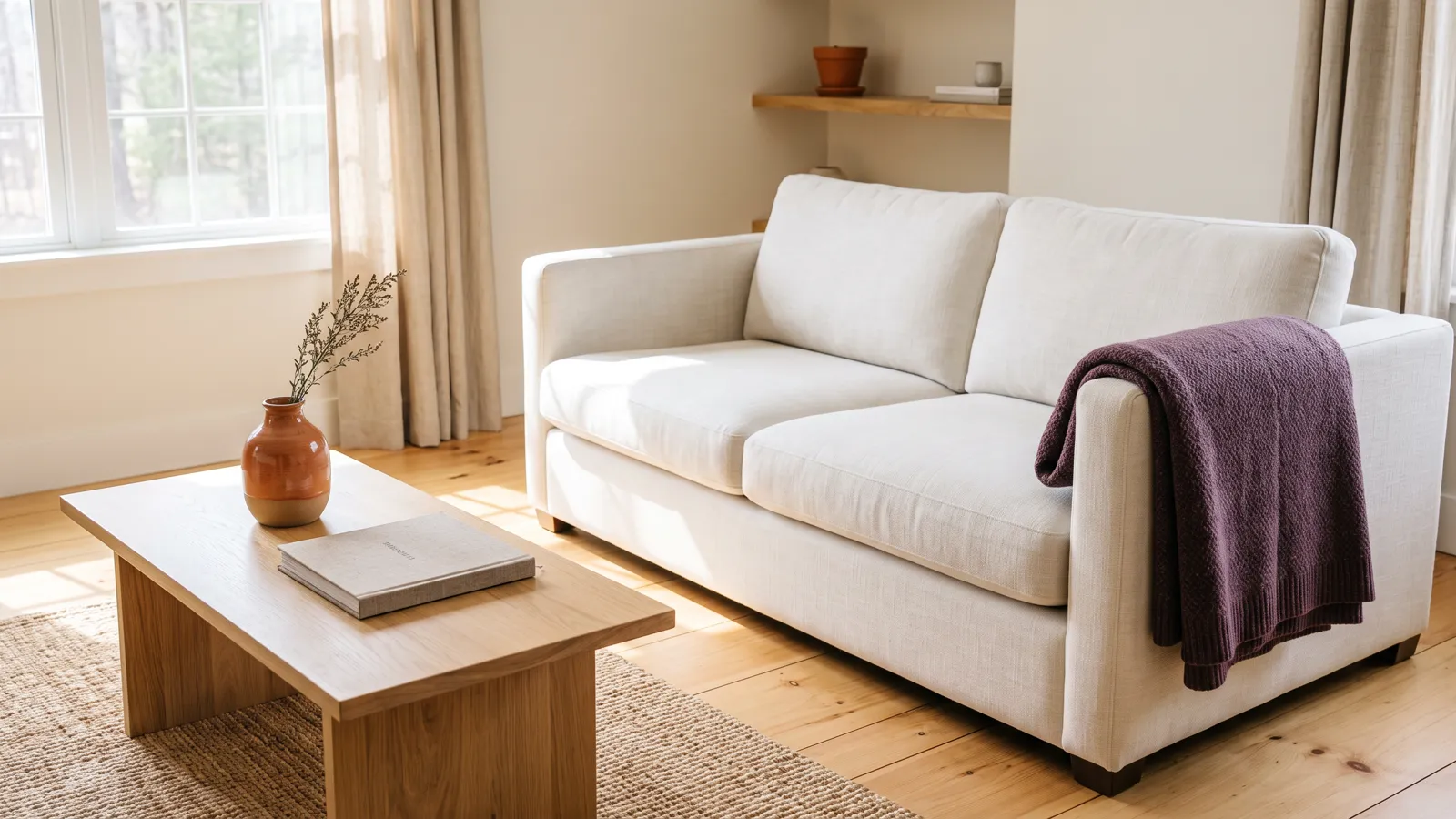
A turnover cleaning checklist is the fixed list of tasks that resets a short-term rental between one guest's checkout and the next check-in: strip and remake the beds, clean every room top to bottom, restock supplies, inspect the home, and lock up. Writing it down is what makes the twentieth arrival look like the first.
What goes on a turnover cleaning checklist?
Five blocks, in this order: laundry, trash and dishes, room-by-room cleaning, restocking, and a final inspection with lock-up. Everything else is detail inside one of those five.
The blocks matter more than the individual lines. Ninety tasks in random order are easy to lose your place in; five blocks fit in your head, and each one has a clear finish.
If you are new to this work, start with what turnover cleaning is and then build the list below around your own home.
What order should you clean a rental between guests?
Start the laundry, clear the waste, then clean from the back of the home toward the front door. That sequence is what keeps a turnover inside a four- or five-hour window.
- Walk the home first. Note damage, missing items and anything left behind before you move a thing. It is the only moment the home still looks the way the guest left it.
- Strip the beds and collect the towels. Laundry takes the longest and runs unattended, so it goes first.
- Clear trash and dishes. Empty every bin, start or unload the dishwasher, put kitchenware back where it belongs.
- Open up. If the weather allows, open a window or run the bathroom fan while you work.
- Clean room by room, top to bottom. Dust and high surfaces before floors, so nothing falls on finished work.
- Work back to front. Begin in the room farthest from the entry and finish at the door, so no one crosses a clean floor.
- Make the beds and set the towels. Same fold, same placement, every time.
- Restock, walk through, lock up. Re-check each room against the list under room light and natural light, then close the home.
Room-by-room turnover cleaning checklist
| Area | On the list |
|---|---|
| Bedrooms | Fresh linens, beds made the same way, surfaces dusted, mirrors clean, under-bed and closet checked for left items, floors vacuumed |
| Bathrooms | Toilet, shower, tub and sink cleaned; mirrors streak-free under side light; faucets dried and polished; fresh towels; toiletries restocked; hair removed from drains and corners |
| Kitchen | Counters, sink and stovetop cleaned; inside and outside of the microwave; appliance fronts and handles wiped; dishes put away; coffee maker emptied and rinsed; bin emptied with a fresh liner |
| Living areas | Surfaces dusted, cushions straightened, remotes and light switches wiped, glass and tabletops clear, floors vacuumed and mopped |
| Entry and stairs | Floor cleaned, door handle and lockbox wiped, stair corners and baseboards dust-free, mat shaken out |
| Laundry and utility | Washer and dryer wiped, lint trap emptied, used linens washed and dried completely, spare set folded on the shelf |
| Whole home | Every bin with a fresh liner, lights and thermostat set, windows closed and locked, neutral scent, nothing of the cleaner's left behind |
Inside the refrigerator and inside the oven sit outside a standard turnover and are quoted as add-ons by the condition of the appliance. Inside cabinets and pantry organization are arranged separately as well. Most hosts schedule them between busy weeks.
For the kitchen lines, the FDA's advice for a home kitchen applies to a rental too: wash cutting boards, dishes, utensils and counters with hot soapy water, and if you use cloth towels, launder them often on the hot cycle. A fridge thermometer is worth leaving in place, since the FDA puts the target at 40 degrees Fahrenheit or below, with the freezer at 0.
What should you restock before the next guest?
Restocking is part of the clean, not a favor at the end. Give every consumable a par level, count against it, and report what is low.
- Toilet paper in each bathroom, plus a visible spare
- Hand soap, body wash and shampoo if the home provides them
- Clean towels in the set the listing promises, folded the same way
- Bin liners in every bin, including the spare liner under the bag
- Dish soap, dishwasher tabs, paper towels, sponge or dish cloth
- Coffee, tea, salt and pepper if they are part of the stay
- Light bulbs, batteries and spare linens held in the closet, not in a guest room
Agree with the host on who buys and who counts, and write that split down with the rest of the list.
What should you inspect during a turnover?
Treat the turnover as the only inspection the home gets between stays, because it usually is. Four things are worth a deliberate look.
Damage and wear. Chips, stains, a loose towel bar, a cracked glass. Photograph it and send it to the host the same day, before the next guest arrives and inherits the question.
Signs of pests. The EPA says to look for rusty or reddish stains on sheets and mattresses, dark excrement spots that bleed into fabric like a marker, and tiny pale eggs or shed skins about a millimeter across. It points to the piping, seams and tags of the mattress and box spring, and to cracks in the bed frame and headboard. The EPA's rule of thumb is that if a crack will hold a credit card, it could hide a bed bug. Finding it early makes treatment far easier.
Moisture. Check under sinks, behind the toilet and around the shower. The EPA advises keeping indoor humidity below 60 percent, ideally between 30 and 50, and notes that wet materials dried within 24 to 48 hours usually will not grow mold. A bathroom fan run during and after cleaning does real work here.
Alarms. The CPSC recommends testing smoke and carbon monoxide alarms monthly and replacing their batteries annually unless the unit has a sealed ten-year battery. It also says CO alarms belong on each level of the home and outside sleeping areas. A chirping alarm at 2 a.m. is a guest problem you can prevent on a Tuesday.
When should you disinfect between guests?
Clean every surface every time; disinfect the high-touch ones when there is a reason. The CDC says to clean high-touch surfaces such as light switches, doorknobs and countertops regularly and after you have visitors, and that cleaning with soap or detergent removes most germs and dirt on its own.
Disinfecting at home, the CDC adds, is likely not needed unless someone is sick or someone sick has recently been there. In a rental you often will not know, so many hosts keep a short high-touch list — switches, handles, remotes, faucet levers, counters — and disinfect it on every turnover.
When you do disinfect, clean the surface first, then use an EPA-registered product and leave it wet for the full contact time printed in the directions. If it dries early, the germs are not killed. Products carrying the EPA's Safer Choice label have had every ingredient reviewed against the agency's criteria for human health and the environment, which is a useful filter for a home where families and pets stay.
How is an apartment turnover checklist different?
An apartment turnover between long-term tenants is a different job: the home is empty, there is no check-in clock, and the work reaches places a guest turnover never touches. Inside cabinets and closets, appliance interiors, walls and switch plates, and floors with the furniture gone.
If that is the visit you are planning, the move-in and move-out cleaning guide is the closer fit. Keep the two lists separate: mixing them produces a guest turnover that runs long and a tenant turnover that misses the empty closets.
What New England adds to the list
Humid summers are the main one. A rental that sits closed between stays holds moisture, and bathrooms go musty faster than anyone expects — which is why the humidity range above is worth a cheap meter in the hallway and a fan on a timer.
Winter brings salt and slush through the door on every boot. A washable entry mat, a mop at every turnover, and a tray for wet shoes keep the residue off the floors. In a Salem or Andover rental, add a line for the mat itself, since it holds more grit than the floor does.
How Andemora runs a turnover
Andemora's Turnover Cleaning follows the Triple-A Standard on every visit. The team arrives on time, uniformed and with its own supplies, and messages on the way. The home is cleaned top to bottom, back of the house to the front door, and personal items go back in their exact place.
Then every room is re-checked against the checklist under room light and natural light. At lock-up the lights go off, the doors are locked, and the host gets a message that the home is ready, along with a photo report. Towels are folded the same way each time, bins get fresh liners, the scent stays neutral, and keys, codes and routines are never discussed with anyone.
If you host in Southern New Hampshire or the Merrimack Valley, you can see all services or request an estimate for your rental.
Frequently asked questions
What do you do with things guests leave behind?
Bag the item, label it with the dates of the stay, and tell the host the same day. Keep it in one place in the home or at the host's address, and agree in advance how long you hold it before donating it.
Does a turnover checklist include inside the refrigerator and the oven?
Those are add-ons rather than standard turnover tasks, and they are quoted by the condition of the appliance. Many hosts put them on a rotation, such as between busy seasons, instead of every visit.
Should a one-bedroom and a four-bedroom use the same checklist?
The same structure, scaled by room. Keep one master list and mark which lines repeat per bedroom and per bathroom, so nothing is missed in the larger home and nothing is padded in the small one.
How do you keep a turnover checklist from going stale?
Review it after anything a guest mentions, after new furniture or appliances arrive, and at the start of each season. A checklist that is never edited stops matching the home.
Who should own the supply count, the host or the cleaner?
The host sets the par level for each item and stocks the closet; the cleaner counts against it and reports what is running low. That split keeps restocking from depending on anyone's memory.
Sources
- When and How to Clean and Disinfect Your Home · CDC
- CO Alarms · U.S. Consumer Product Safety Commission
- How to Find Bed Bugs · EPA
- A Brief Guide to Mold, Moisture and Your Home · EPA
- Safe Food Handling · FDA
- Learn About the Safer Choice Label · EPA